Interior Panel Fire Reports: Check the Scope Before Buying
Updated:
Match the interior panel model, finish and fixing arrangement to the fire documentation before purchasing. A buyer checklist without assumed ratings.
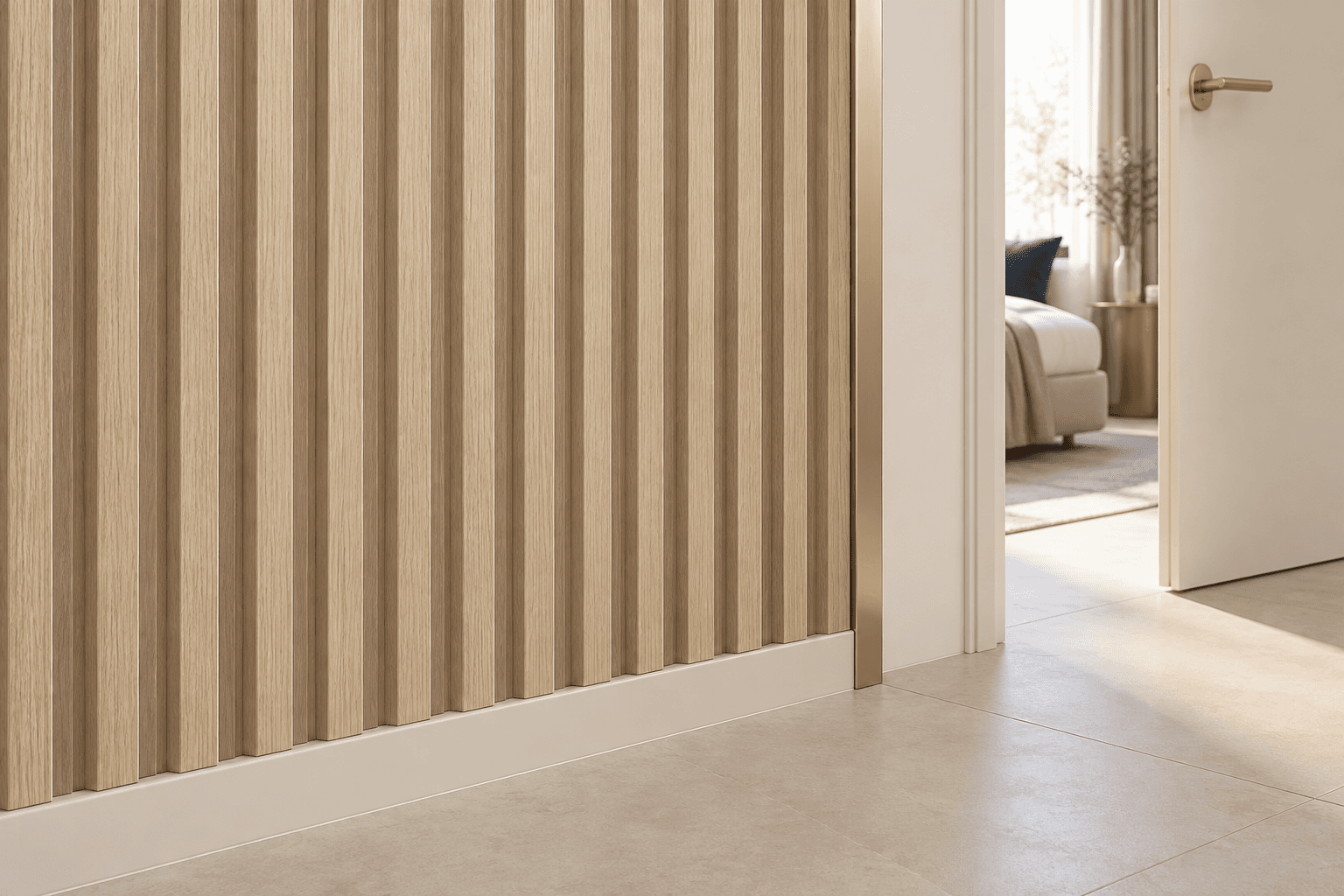
A report must match the proposed panel
Before buying decorative interior panels, ask what the supplied fire documentation actually covers. A material name, an attractive sample or an isolated classification label does not identify the full product and installation being reviewed. Begin with the exact model and the intended project use.
This is a buyer document checklist, not a fire classification for SZ STRONG BUILD products. No rating, certificate or permission for a particular building is asserted here. The project's competent designer and relevant local authority must determine the applicable requirements and suitability.
Read the field of application
The UK government's Approved Document B FAQ explains that reaction-to-fire results depend on the tested configuration, including form, orientation, joints, mounting and fixing. Read the report's field of application with the proposed arrangement in mind. Its guidance applies to England; it is not an approval for a project elsewhere.
The EU classification regulation illustrates that reaction-to-fire performance is described within a defined classification system. Do not treat a label from one system as an automatic equivalent under another. Ask the project reviewer which evidence is required for the intended destination.
Build a product-to-document record
We recommend collecting these fields before comparing quotations:
The list is a procurement tool. Missing information stays open; a buyer should not fill it from a different panel's document or infer it from a colour sample. Keep proposed substitutions visible in the same record.
Use wall-panel models as the product reference for this record. Connect the findings to panel junction planning before preparing the enquiry.
- Supplier and exact product model, with a dated specification reference.
- Core or base material, decorative surface, thickness and other identifying details stated in the report.
- Laboratory, report number, issue date and the complete document rather than a cropped result.
- Test or classification standard and the stated outcome, copied with its limitations.
- Tested substrate, adhesive or fixing arrangement, joints and orientation where documented.
- Intended project use and any differences the technical reviewer must resolve.
| Check | Proposed product / assembly | Report entry to match |
|---|---|---|
| Identity | Model, manufacturer and finish reference | Product description and sample identification |
| Construction | Thickness, core, facing and coating | Test specimen construction and permitted variations |
| Mounting | Substrate, air gap, fixing and joints | Tested mounting arrangement and field of application |
| Use and scope | Project location and intended use | Classification scope and limitations |
| Document control | Report number, issue date and issuer | Complete report, referenced annexes and issuer confirmation |
| Mismatch | List each difference and responsible reviewer | Written scope review before specifying the assembly |
Verify the issuer and ask about scope
Where a report claims a listing or certification, follow the issuer's official verification instructions. UL Solutions' Product iQ guide explains how to search for named designs or systems. Reconcile the actual record with the proposed product and installation, and ask the issuer directly when a reference cannot be matched.
UL Solutions describes multiple certification schemes and bodies. Its guidance is a reason to identify the actual scheme and document, not to assume a UL logo means the same thing in every market. This article does not claim that SZ holds a UL certificate.
Route unresolved differences before ordering
Our suggested workflow is to name an owner for each mismatch, record the question sent and retain the written answer. Ask the project reviewer to assess changes in finish, thickness, substrate or fixing before treating an existing report as applicable. If further evidence is needed, keep the approval step open rather than converting a supplier's general assurance into technical acceptance.
Keep the approved model reference, document revision and unresolved exclusions with the purchase record. If the order specification changes, repeat the affected review. This creates a traceable discussion without promising that a named material automatically provides a particular fire performance.
Send a focused sourcing request
Send the product-to-report sheet with the model, finish, intended mounting arrangement and report references. List the exact differences that the project reviewer must resolve before the proposed panel assembly is specified.
For the related decision, use the cleaning compatibility record.